Jason Chai (2008 Alumnus) - Director of Market Access and Government Affairs, Cochlear Asia-Pacific
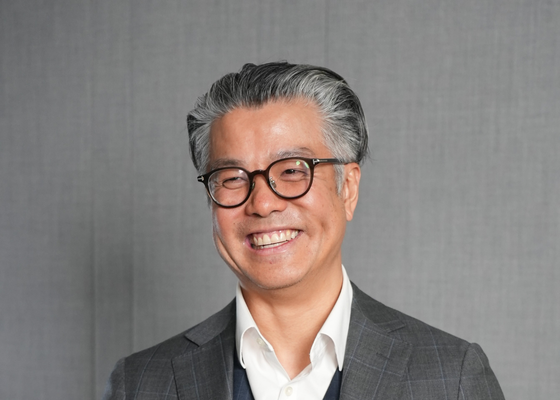
A Foot in Two Cultures: Turning Asia Capabilities into a Career ‘Superpower’
The son of Chinese migrants from Malaysia and Singapore, Jason Chai grew up in Australia with a foot in two cultures. “Don’t lose connection to your culture. Don’t lose connection to your past and your history,” his parents told him. That exhortation, and the mood of the times as leaders like Prime Ministers Bob Hawke and Paul Keating began reorienting Australia to Asia, became the compass for a career shaped by Asia’s rise and Australia’s shifting place in the world.
“I’ve always had a very strong connection to Asia,” says Chai, noting that force has guided him through roles in government, diplomacy and advocacy. Now working in business as Director of Market Access and Government Affairs for Asia Pacific at Cochlear, Australia’s hearing-implant pioneer, Chai spends his days navigating the policy thickets of expanding access to hearing technology in some of the world’s most complex markets.
It is a remit that blends public policy with private ambition. “I’m helping Cochlear advocate with governments around the region for better access to Cochlear technology,” Chai explains.
That includes funding models, local regulatory reform, and training. In a company like Cochlear, which has a global presence in 180 countries, “having the context of working with cross-cultural teams is obviously an advantage,” he says.
A Diplomatic Detour
Chai started studying law and international business, with an initial interest in commercial arbitration.
But a voluntary stint in China with the Asian Development Bank under the Australian Youth Ambassador Program changed everything. “I met a diplomat for the first time, and he encouraged me to apply for the foreign service,” he explains.
Nine months later, Chai was accepted into the Department of Foreign Affairs and Trade’s graduate intake, launching a decade-long career that would take him to Japan, where he worked on climate negotiations and the United Nations Convention on the Law of the Sea.
However, for Chai, the pace of government, and the constraints of diplomacy, soon felt limiting. “I recognised that I wanted to make a bigger impact, not only on international issues, but also in Australia.” He pivoted into political advisory roles and then into the private sector, first with the Business Council of Australia and eventually into government relations at medicinal cannabis company, Canopy Growth, and now Cochlear. “There are a number of industries, including healthcare, which are highly regulated… so moving to a commercial operation wasn’t that foreign for me.”
A Continent of Context
In 2008, just before his Japan posting, Chai enrolled in the Asialink Leaders Program. The timing puzzled the Program’s selection panel. “They said, ‘You’re about to go to Japan. Why would you want to do this program?’” His answer was simple: “I recognise that there’s always more that I can learn from other people.” That hunger for cross-cultural insight has defined his work ever since. For Chai, being “Asia-capable” is about depth.
“Patience, trust, elaboration, finding win-win outcomes, those are the skills needed to succeed,” he says. And most critically, “recognising the history and the context in which Asian societies come from.”
In Asia, history is not past, it is present. “Social beliefs, mores and cultural norms come from a deep-seated, long history of thinking and philosophy,” Chai explains. Overlay that with colonial legacies and wartime experiences, and you have a diplomatic and commercial environment that demands tact and time. In such contexts, “people are always looking for difference, but to effectively operate in business we’re looking for commonality.”
The lesson holds for geopolitics too. “The world is changing really quickly,” Chai warns. With global alignments shifting, “people are asking themselves, how do we best act in our own national interests?” For Australia, nestled in the Indo-Pacific, Chai says it is important “to be very purposeful about engagement with Asia.”
The Virtue of Staying Power
Demographic change, both in Asia and at home, supports Chai’s case. “There’s increasing migration from East Asia, from China, from India,” he observes. “That will naturally flow through into Australia,” creating new cultural and commercial bridges. But he warns that opportunity alone is not enough.
“Australia and Asia have traditionally traded in goods and services that have been our comparative advantage. Australia in minerals and agriculture, Asia in electronics and automotives. But the next phase of industrialisation and trade is increasingly digital. We’ve seen companies like Airwallex and Airtrunk, led by former international students, Jack Zhang and Robin Khuda, turn their locally grown Australian businesses into billion-dollar global enterprises. Tapping into Australian talent and exporting to Asia and the world. This type of collaboration is the future, and I hope we see more of this type of win-win collaboration occurring,” he advises.
Cochlear’s success in China illustrates how that future could be built. The company engagement began as a diplomatic gesture and is now a pillar of bilateral cooperation. “In the 1990s, First Lady Anita Keating donated the very first newborn hearing screening machine to China,” Chai notes.
Since then, Cochlear has helped more than 50,000 Chinese patients born deaf or with hearing loss and trained a generation of audiologists in China. “We weren’t just building a market,” says Chai, “we were building capacity. It’s something that Australia should be proud of.”
Such long-term investment, he says, distinguishes serious players from opportunists. “Those who are creating products, not just throwing products across the fence but actually customising them for Asian markets, have done very well.”
Australia’s Next 30 Years
Chai is bullish about the role commercial actors can play in strengthening ties. “Australian companies should continue doing what they do best. Asia is growing up, and they want the same lifestyle, goods and services as the rest of the developed world enjoys. So, if you’re excellent in Australia, it’s only natural that there will be people in China, India, and throughout Southeast Asia who also want the very best products for their citizens,” he says.
Chai suggests that what’s needed next is a mindset shift and says that for young entrepreneurs eyeing Asia, it’s not just about access, but alignment. “We [Australia] need to be finely attuned to collaborating with innovators in the region. To build trust, execute with purpose and have alignment for that win-win outcome,” he says.
Jason Chai is the Director of Market Access and Government Affairs for Cochlear AsiaPacific. He is a former Australian diplomat and has worked for the Department of Foreign Affairs and Trade, as well as at senior government levels, including as a Chief of Staff to a Victorian Minister of Trade and Investment. Chai completed the Asialink Leaders Program in 2008.