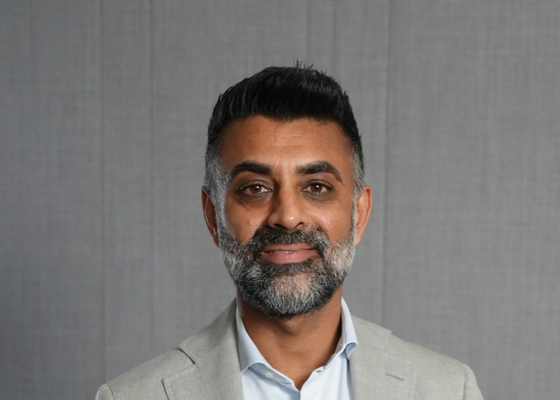
Jai Patel (2015 Alumnus) - Partner, KPMG
The business of belonging: India’s diaspora as Australia’s strategic advantage
When Jai Patel walks into a meeting in Mumbai, he is often greeted with a knowing look. “You’re Indian, aren’t you?” they ask. “It’s in those moments that I actually feel very Australian,” he reflects. A partner at KPMG and head of its India Business Practice, Patel straddles two worlds with ease. “I feel very Australian in India and I feel very Indian in Australia,” he says.
It is a duality that has served him well and one that may hold the key to deepening Australia’s engagement with one of the world’s most important rising powers: India. “Diaspora linkages and connections are a crucial enabler for what Australia and India can do together around some of the world’s biggest challenges and opportunities,” Patel argues.
According to the Australian Bureau of Statistics, the population of Indian-born people living in Australia has more than doubled in the past decade to reach 916,330 by 2024 and is forecast to be the largest diaspora group in Australia by 2026. While the numbers are compelling, Patel urges a shift in mindset from viewing the diaspora as a group of consumers or workers, to recognising it as a community of entrepreneurs, innovators and professionals that is uniquely placed to help Australia succeed with India.
These diasporic relationships are especially important strategic assets in a time of geopolitical and economic realignment, Patel believes.
“To help businesses, but also people, understand why India is important to Australia, and how we can grow that engagement there. It’s not just the economic story, the diaspora story is also really important,” he explains.
Identity as strategy
While Patel now sits comfortably in both Australia and India, for much of his youth, this identity was hidden in plain sight. Born and raised in Sydney to migrant parents, Patel says he always felt he was in the minority while growing up. “At primary school, I was the only brown boy. I never spoke about my Indian culture at school; you never spoke about that in the workplace when I first started out.”
It was only later in his career that Patel began to integrate his Indian and Australian selves. “There came a point where I sought help. I engaged a coach and we worked on my personal brand, which elevated my self-confidence and therefore my comfort around who I was and what I stood for.” The result: “I’m this duality, I can be that person. I can turn it on. I can dial it up and down, and I’m comfortable wherever I’m at.”
It is this duality, the ability to read both cultures fluently, that is increasingly in demand. “You can’t do business with India from 10,000 kilometers away,” Patel warns. “You need to be in-market, you need to be on the ground. You need to develop those relationships. Trust is a big thing.” And once that trust is earned? “Then the possibilities are endless.”
The changing cultural and ethnic makeup of the Australian workforce is something Patel says is vitally important to embracing these possibilities. “I’ve been here a long time and what I’ve noticed over the years is more and more brown faces on our floors.” The increasing diversity of the Australian population “is reflected in the fabric of our firm,” he observes.
To strengthen this fabric, Patel started the KPMG Indian Connections Club, which brings together people of Indian background from across the firm. This organisation has helped other people feel comfortable in bringing their own identity to the workplace, but Patel says its real strength is the way it has brought together people of all backgrounds from across the firm.
“I’d say there are now more than 350 people of Indian heritage at KPMG now and the club celebrates Diwali [the Hindu festival of lights] each year. Club members come dressed up, they’ve caught public transport in their saris and they’re in that outfit in the office for the day,” he says animatedly. “But in the last two years we are getting non-Indian Australian colleagues coming along, dressed up as well. It’s not just to do this amongst ourselves, it’s to share it, and it’s glorious,” he says.
Finding a voice, gaining confidence
Although executive coaching helped him gain confidence, a secondment to KPMG Mumbai in 2006 also marked a turning point in his cultural journey, according to Patel. “It coincided with my first move out of home,” he says. It opened his eyes to “the vast opportunities that India offered Australia and vice versa.”
Patel’s role today involves guiding both inbound Indian businesses and Australian firms keen to break into India. But one of the key things he says he learned professionally and personally from his time in Mumbai is that what matters most is connection. “You can’t be transactional. I’ve learned that. What works is spending time being curious, not just about their business, but about them personally.”
Sometimes, that connection is sparked through unexpected channels. “Music is my passion,” he says, “and if I sense it in another person, I tease it out.” At a gala in Abu Dhabi hosted by Indiaspora, a US-headquartered organisation for connecting the global Indian diaspora, Patel sang. A leading Indian-Australian businessman, moved by the performance, reached out to Patel as a result. “He sent me a text message afterwards that said ‘you have gone from down here to up here in my eyes’, ” Patel says. “This was not because of my professional capability,” he notes, but because of his singing. The lesson? “Bring your whole and authentic self to the workplace, that will help you to make connections,” Patel says.
This ethos of presence, authenticity, and a shared story is what makes the diaspora a strategic advantage. And what lies behind the Indian diaspora’s success? Patel puts it simply. “Humble beginnings. Struggles. They’ve got nothing to lose. What they do have is a hard work ethic, resilience, and ambition. And there’s an element of innovation and creativity in our DNA.” He reaches for a Hindi term: ‘jugaad’. “It means there’s always a way of making something happen.”
The diaspora dividend
Patel’s participation in the Asialink Leaders Program is a formative example of his talent for leveraging personal connections to grow personally and in his career. “It’s a preeminent elite platform,” he says. “In hindsight, the opportunity to learn from such a diverse range of backgrounds from business, government, and the arts was really inspiring.” The network, he believes, will shape the next generation of Asia-engaged Australians.
The Australian-Indian connection is vital for growing Asia engagement in the years to come, Patel says, especially given the dynamism of the next generation of Indians, and Indian Australians, who are starting to enter the workforce.
“That critical mass of young Indians is what’s going to drive innovation, new and different collaborations, opportunities and curiosity,” Patel says. “There’s just so much opportunity for business and social, cultural exchange.”
Australia’s foreign and trade policy is catching up to this shift. But Patel cautions that strategy cannot be built from Canberra boardrooms alone. It must involve the diaspora not just as guests at the table, but as co-authors of the agenda.
Jai Patel is a partner at KPMG Australia and is head of the consultancy’s India Business Practice and Country Head for Indiaspora. He completed the Asialink Leaders Program in 2015.