Turbocharging economic engagement and political resilience in the ASEAN-Australia partnership
Australia needs to expand on its agenda for Southeast Asia by pursuing new avenues to strengthen economic engagement and shared political resilience, writes Martine Letts.
28 November 2025
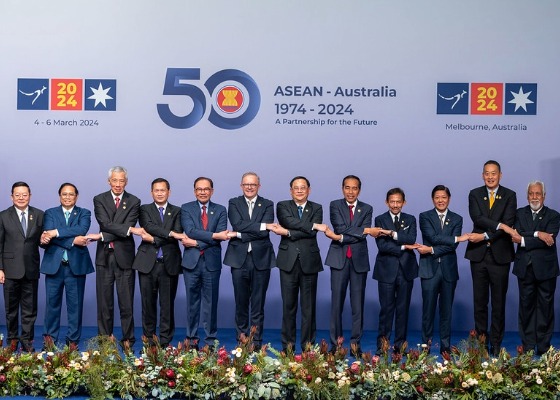
In 2024, to mark 50 years of partnership, Australia and ASEAN issued a “Vision Statement” reaffirming a mutual commitment to their relationship that highlighted collaboration to promote a rules-based regional architecture.
The conventional wisdom today is that the international rules that underwrite this regional architecture are under severe strain and that a new set of standards needs to be created to reflect a changed global order; an increasingly fractured world characterised by an “everyone for themselves” philosophy, whose prime advocate sits in the White House.
Alternative arrangements such as minilateral or special purpose arrangements have been touted as more fit for purpose. These include strategic and security related groupings such as the Quad and AUKUS, and economic related groupings such as the Australia-India-Japan Trilateral supply chain resilience initiative (SCRI) or the BRICS, initially for emerging economies, but now with increasingly broad ambitions.
We should not lose sight, however, of the opportunities within Southeast Asia to forge a resilient and collaborative regional ecosystem based on respect for the rules-based architecture.
Despite being the first country to sign a Comprehensive Strategic Partnership (CSP) with ASEAN four years ago, deeper ASEAN-Australia engagement—especially economic engagement—has been slow.
The confusion surrounding the future US role in the Indo-Pacific region, particularly as a trade, security and development partner, has further encouraged Australia to reimagine its role and relationships in the region.
The question is, can Australia, and other middle powers, step into the vacuum left by the US? Do our strategic interests sufficiently align with individual countries in ASEAN, and with ASEAN as a whole, to offer a new and reliable way of managing a contested Indo-Pacific? And how does Australia find space to do so when so many countries already collaborate with ASEAN, amid a growing queue for ASEAN attention?
Two key issues for Australia in the region are how to increase economic engagement and how to increase political resilience.
First, greater economic engagement with Southeast Asia is a top priority for the Albanese government. Canberra recognises that our economic future is intrinsically linked to the prosperity of Southeast Asia. Released in 2023, the “Southeast Asia Economic Strategy to 2040”, authored by former banker Nicholas Moore AO, continues to be strongly promoted by the Prime Minister as the template for closer Australian engagement with this region, and includes an exhortation for Australian business, government and the broader community to become more Asia capable. This sentiment is not yet fully shared, especially in the world of business, which continues to undervalue international and Asia experience for its workforce.
While the Minister for Industry and Innovation, Tim Ayers, recently pronounced at an Asialink gathering that “our geography, along with the capacity and ambition of our regional partners, means a Future Made in Australia is also a future made in the region together”, considerable scepticism remains, including within the Canberra bureaucracy.
In the meantime, the growth of Southeast Asian economies has outpaced Australia’s economic engagement and competition for ASEAN attention grows.
The Moore Report found that Australia’s two-way trade and investment in the region is woefully inadequate, comprising only 3.4% of Australia’s total outbound investment.
Two years on from the release of the report, the Australian government is continuing to commit significant resources to the Southeast Asia Economic Strategy, including a free trade agreement modernisation agenda, and Austrade’s landing pads and deal teams providing support to businesses on the ground.
Australian Business Champions have been appointed for different Southeast Asian Markets, in a program run by Asialink Business, leveraging the experience and influence of CEOs and C-suite executives from leading Australian organisations to promote greater trade and investment between Australia in the areas identified by the report, including food security, the green energy transition, education, healthcare and the digital economy, among other sectors.
Even so, business engagement and investment remain underdone—partly because the business community is quite risk averse and prefers to stick with familiar markets, such as China.
It also is the case that serious regulatory challenges remain in Southeast Asia, which undermine confidence for Australian investment. The challenges differ from country to country, but work needs to be done to simplify regulatory processes, modernise bilateral trade agreements and reduce barriers to foreign competition. This is especially important for SMEs but also for larger enterprises.
Our large diaspora populations and alumni networks in Southeast Asia provide us with unique advantages and opportunities. The diaspora’s cultural dynamism, entrepreneurship and risk appetite needs to seep into our wider business community. It is a resource Australia ought to leverage more in our economic engagement strategy.
Second, security and prosperity in ASEAN align with Australia’s broader national security objectives. In addition to greater economic engagement, Australia has an interest in political resilience among ASEAN states, to help ensure our shared goal of a free and open region.
In a very practical way, Australia can work with ASEAN countries to manage great power pressure and the perception of being forced to choose sides. Australia also can learn from ASEAN’s historic and current experience of managing economic growth and security within the ambit of great power competition.
Multilaterally, there may be scope for deeper engagement by Australia in forums like the ASEAN plus Three group (ASEAN plus China, Japan and South Korea). Australia’s membership in a group that encompasses the key nations in East and South-East Asia would certainly be a major step forward—if they would have us.
Sharing insights into other global threats—perhaps via a Track Two process such as the ASEAN-Australia-New Zealand dialogue on real and emerging nuclear threats in the Indo-Pacific, outside the politically constrained ASEAN Regional Forum, is another idea. Such a process might also help mitigate regional concerns about AUKUS.
Finally, via our $1.3 billion in development assistance package to Southeast Asia and by sharing relevant expertise, Australia and ASEAN member states can collaborate to consolidate sustained partnership, co-creation of norms, and joint investments in areas of common interest such as climate resilience, pandemic response, food security, and education.
Martine Letts is the Group CEO of Asialink.
This article was adapted from a panel discussion at the 17th ASEAN-Australia-New Zealand Dialogue hosted by the Institute of Strategic & International Studies (ISIS) Malaysia. It will also be published in the ISIS Focus publication in Q1 2026.
Image: "ASEAN-Australia Leaders’ Vision Statement and the Melbourne Declaration" by ASEAN Secretariat
How can we help? Get in touch to discuss how we can help you engage with Asia