Maritime security means—and matters—more than you think in the Indo-Pacific
Maritime security has risen swiftly and steeply on the geopolitical agenda of the Indo-Pacific in recent years. But in a region named for two bodies of water it is set to dominate even more in the years ahead, writes Benjamin Zawacki.
25 November 2025
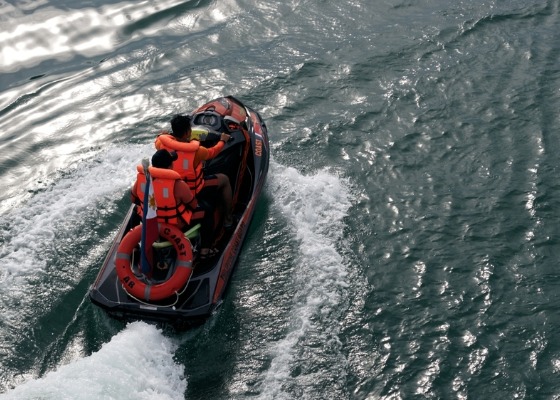
Late last month, on the same day the Philippines accepted the 2026 chair of the Association of Southeast Asian Nations (ASEAN), President Ferdinand Marcos addressed the 22nd ASEAN-India Summit. “Foremost, as a maritime and archipelagic nation,” he began, “I wish to highlight the great importance of the rule of law in our oceans.”
Marcos might have mentioned the recent conflict between Thailand and Cambodia to parallel India’s contested land borders with China and Pakistan but led instead with shared ASEAN-India interests and concerns over the seas. “Both ASEAN and India,” he continued, “should see peaceful settlement of disputes and maritime cooperation as essential … to the peace and prosperity of the Indo-Pacific region.”
It is easy to see why. Not only has maritime security risen swiftly and steeply on the geopolitical agenda over the past several years but, critically, its scope has broadened even more. For a region fittingly named for two bodies of water accounting for almost half the earth’s surface, nearly all security concerns manifest themselves in the maritime sphere.
Myanmar’s civil war excepted, most major armed conflicts (notably those in Ukraine, Gaza and Sudan) are taking place outside the Indo-Pacific. But those most concerning in the region are rooted in bodies of water synonymous with saber-rattling: the South China Sea, Taiwan Strait, and East China Sea. Ships, not soldiers, would decide their outcomes. Indeed, just two weeks before the summits, Chinese vessels water-cannoned three Philippine fishing boats near the Spratly Islands and rammed one of them in the stern.
More in evidence are non-traditional security concerns, ranging from human trafficking and people smuggling, to the unlawful drugs trade, illegal, unreported and unregulated (IUU) fishing, and cyber-attacks and scam centers. While most of these reside or occur on land as well, their prevalence at sea—drug shipments in the Gulf of Thailand, unflagged trawlers in the Bay of Bengal, a severed undersea cable in Micronesia—has been rising rapidly in the Indo-Pacific. Chief among them are ‘gray zone’ tactics, coercive actions not rising to the level of military force but which pressure one country to act according to the interests of another. Water cannoning and ramming are two such tactics.
Economic security in the region is also heavily weighted to the maritime sphere, given that only four of its countries—Bhutan, Laos, Mongolia, and Nepal—do not have a coastline. The reliability of established trade routes and supply chains, such as the Strait of Malacca, the South China Sea, and the Sea of Japan, is crucial for countries’ trade and investment relationships. Pre-existing and planned power links, gas pipelines, offshore wind networks, deep-sea mining equipment, environmental sensor cables, and even data centers are all in or under the water and represent sources of astounding national wealth and growth. Lawful fishing, like that being done by the Philippines’ three boats in the Spratlys, constitutes a substantial portion of many Indo-Pacific countries’ economies and of ASEAN’s new Blue Economy Framework.
Conversely, the impact of IUU fishing—accounting for over a third of the Indo-Pacific’s recorded catches—is one of deprived returns, depleted resources, and declining food security. Aquaculture is growing in response to these activities. And hydrocarbons—a cause and effect alike of the region’s slow transition to green energy—remain an attractive and lucrative economic element off the coasts of, among others, Australia, Cambodia, Indonesia, Malaysia and Timor-Leste—which, also last month, became ASEAN’s newest member state.
ASEAN’s 2019 Outlook on the Indo-Pacific lists “maritime security” as the first of four areas for attention. Providing a basis not only for internal cooperation but one for ASEAN’s engagement with external powers too, the Outlook defines such security to include: maritime connectivity, commerce, and green shipping; maritime safety and hazards; coastal communities; marine biodiversity, science, and sea-level rise; and maritime resources, pollution, and debris. While it rightly acknowledges “unresolved maritime disputes that have the potential for open conflict”, it otherwise emphasises the all-encompassing nature and importance of the maritime sphere in Southeast Asia’s collective security calculus. Not for nothing has India joined ASEAN in designating 2026 as the “Year of Maritime Cooperation”.
Other external countries would be advised to follow suit. The COVID-19 pandemic aside, this year has arguably brought more change and uncertainty to the world since the terrorist attacks of 9/11. But amid increased defence spending, rising protectionism, new climate records, and declining aid budgets, maritime security isn’t going anywhere in the Indo-Pacific. Governments are prioritising their navies and coastguards for funding and resources and establishing a new array of minilateral maritime partnerships with one another and non-regional powers. AUKUS is exceptional only in its nuclear component; its second pillar includes a raft of other undersea capabilities. Tariffs are a growing reality, but as shipping accounts for the movement of some 80 percent of goods worldwide, they are more likely to merely redirect trade than to lessen it. Shipping also accounts for 3 percent of global greenhouse gas emissions—more than the airline industry—forcing a focus on green shipping atop oceans struggling in their role as carbon sinks.
President Marcos spoke for the entire Indo-Pacific at the ASEAN-India Summit and his intended audience was wider still. Ensuring the security of a region already setting the 21st century’s geopolitical agenda means engagement that neither starts nor stops at the water’s edge.
Benjamin Zawacki is a Southeast Asia-based lawyer and analyst and the author of Thailand: Shifting Ground Between the US and a Rising China
How can we help? Get in touch to discuss how we can help you engage with Asia