Indo-Pacific regional security in ambiguous times
Faced with growing strategic rivalry in the Indo-Pacific, smaller and middle powers need to play a bigger role in shaping a stable and inclusive regional order and. Help mitigate the risks of conflict, writes Charles Labrecque.
29 July 2025
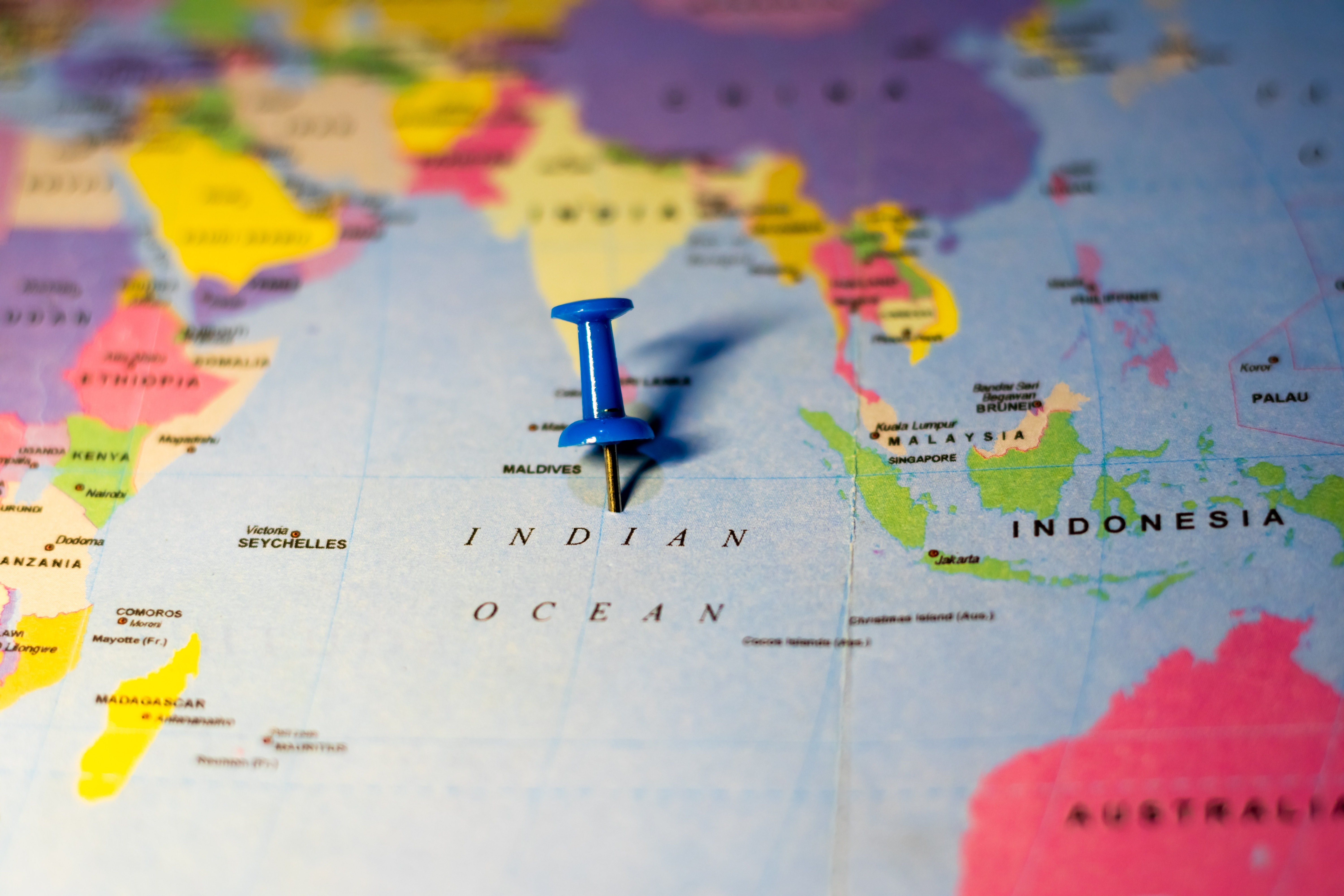
The Indo-Pacific is at a pivotal and transformative moment. Intensifying geopolitical rivalries, accelerating military modernisation, and growing technological competition have placed the region at the heart of a shifting international order. Uncertainty surrounding the new US administration’s stance on alliances, international institutions, and global trade—coupled with the escalating strategic rivalry between the two superpowers—is leaving countries in the region navigating a complex and volatile landscape. This comes on top of a host of other long-standing challenges, including economic disparities, climate-related risks, and unresolved territorial disputes, that are further complicating relations in the region. The central question now is how the Indo-Pacific can manage these different pressures without slipping into conflict or instability.
The US–China relationship remains central to regional security dynamics in Asia, continuing to shape the strategic environment in profound ways. Over the past year, there have been efforts to recalibrate diplomatic ties and restore high-level communication between Washington and Beijing, despite persistent frictions. However, these engagement efforts have been largely eclipsed by a prevailing consensus in Washington favouring strategic competition with China.
Restrictions on semiconductor exports and investment in sensitive technology sectors, along with additional tariffs, have in recent years strained an already delicate relationship. The trade war launched by the administration of Donald Trump has significantly damaged bilateral ties. A resulting decoupling between the world’s two largest economies—although not likely—would have profoundly negative consequences and be extremely risky, as it would eliminate some communication channels for de-escalation and increase the likelihood of miscalculation.
While the two superpowers managed to avoid direct confrontation during Trump’s first term, a second Trump administration that sees China as its primary adversary would not bode well for the future. Both countries have incentives to manage their current trade differences—as the various temporary agreements recently negotiated underscore—but the structural drivers of their rivalry are likely to persist. These enduring tensions suggest that even temporary compromises are unlikely to bring long-term stability to the relationship. This trade war between the US and China is fuelling significant uncertainty and posing a growing threat to regional security, increasingly forcing countries in the region to make difficult choices.
Beyond US–China strategic competition, other regional conflicts in the Indo-Pacific are simmering—and even boiling over, as was seen in the conflict between India and Pakistan in May 2025. Regional players are also watching closely the situation in Ukraine. Countries from the region, whether aligned with major powers or pursuing more independent strategies, are observing the war with great interest and drawing lessons about deterrence, the limits of international law, the role of alliances, and the consequences of military aggression. The Ukraine conflict has become a lens through which Indo-Pacific players assess their own weaknesses and the credibility of external security guarantees.
With the goal of preserving peace and stability in the region, several actors in the Indo-Pacific have increasingly asserted their influence in shaping the evolution of the region. In recent years, Japan and South Korea have deepened their security cooperation, forging stronger trilateral ties with the US through the Camp David Principles established in 2023. Japan has also emerged as a more assertive actor, taking greater responsibility for its own security and more actively contributing to regional stability. India, driven by its own strategic imperatives, has expanded its regional role—particularly in the Indian Ocean and the Persian Gulf through strengthened anti-piracy operations and an increased naval presence—moving from a coastal defence posture to a more proactive approach in upholding the maritime order.
Meanwhile, Southeast Asia remains a crucial arena where strategic balancing plays out, with ASEAN seeking to maintain its centrality despite growing pressures to take sides between the US and China. The situation in Myanmar, however, compromises ASEAN centrality and unity—as its members remain divided on the crisis—and hinders its ability to play a central role in defusing the civil war, including implementing its own Five-Point Consensus, which had been negotiated to address the crisis following the military coup on February 1, 2021.
ASEAN continues to play a crucial convening role through regional platforms like the East Asia Summit and the ASEAN Regional Forum, offering spaces for dialogue and confidence-building even amid intensifying great-power competition. While these institutions remain relevant, they have been criticised for their inability to address major regional challenges. As a result, in the last few years, several minilateral groupings and issue-specific coalitions have popped up. Notably, middle powers in Asia have seen their influence grow through their increasing participation in these new minilateral groupings.
These developments underscore the region’s strategic importance and its rapidly evolving security architecture, particularly in an increasingly contested and multipolar world. As the Indo-Pacific navigates this period of flux, the ability of regional actors to shape a more stable and inclusive order will depend on their capacity to engage constructively, reinforce diplomatic channels, and invest in resilient multilateral frameworks. The region’s future will hinge not only on how major powers manage their competition, but also on how smaller and middle powers assert their agency, foster cooperation, and mitigate the risks of escalation. While challenges abound, the diversity of perspectives and strategic approaches across the Indo-Pacific offers both complexity and opportunity—making regional diplomacy and dialogue more critical than ever.
Charles Labrecque is the Director of Research at the Asia Pacific Foundation of Canada.
This is an edited version of an article that appeared in the Council for Security Cooperation in the Asia Pacific Regional Security Outlook 2025. The full article can be accessed at https://www.asiapacific.ca/sites/default/files/inline_files/CSCAP_RSO_2025_Web%20Optimized.pdf
How can we help? Get in touch to discuss how we can help you engage with Asia