Bridging the digital divide: Ensuring telehealth inclusivity for people with disabilities in India
The COVID-19 pandemic proved a spur for the global adoption of telehealth. But as Nathan Grills and Grace Corcoran argue the expansion of virtual health care in India is an opportunity for more equitable and inclusive health access.
11 September 2024
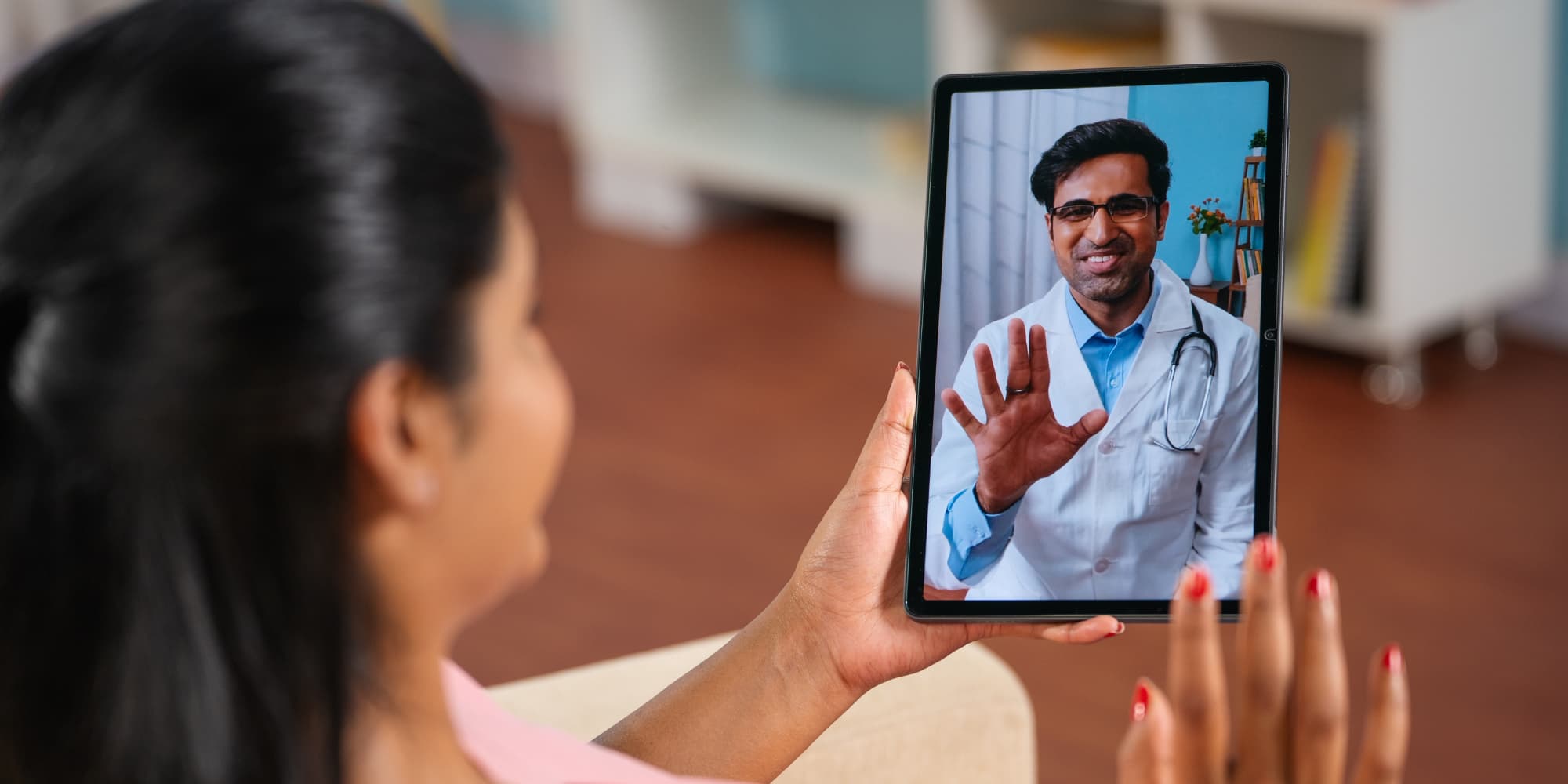
The COVID-19 pandemic dramatically shifted the way we work in many sectors around the world, and healthcare is no exception. The rapid scaling of telehealth during the pandemic offered a glimpse into a future where accessible, adaptable, dynamic, virtual healthcare could become a core component of medical care delivery.
During the pandemic, India, like Australia, quickly adopted virtual healthcare in an attempt to provide support to its 1.4 billion people amidst strict lockdowns and widespread serious illness related to COVID.
However, throughout this swift digital transformation, the health and rehabilitation needs of people living with disabilities were not always prioritised or adequately considered.
In response, the VirtuCare research project, led by the University of Melbourne and working with counterparts across Australia and India, has worked to ensure virtual healthcare solutions are inclusive for those living with disabilities.
Virtual health care has amazing potential to provide healthcare to people with disability across India. Virtual healthcare allows people with disabilities to schedule appointments at their convenience, reduces the risk of cross infection, eliminates long wait times, decreases cost and the need to travel.
For those living with visual or hearing impairments, or other cognitive or communication difficulties, telehealth can provide personalised and effective care, such as using online interpreters, including for sign language. Similarly, home-based assessments and programs were shown to be effective in improving motor performance, self-care, and functional abilities for children with disabilities.
However, virtual health care must be intentionally designed to be disability inclusive. If we don’t actively think how to include people with disability in virtual health, then we risk passively excluding them.
Indeed, it has been found, that despite the rise in telehealth appointments since the pandemic, people with disabilities and low levels of health literacy are less likely to receive virtual healthcare services. This compounds the effect of existing structural inequalities and increases the gaps between those with and those without disability.
Therefore, it is crucial to address both technological and structural barriers, including through enhanced platform accessibility, comprehensive support for those that need it, and improved digital infrastructure.
In India, telehealth is playing an increasingly critical role in ensuring the continuity of care for many millions of people.
Private hospital, health providers and technology companies have rapidly expanded the services they offer and some have prioritised disability inclusivity. However, services vary greatly and are largely unregulated making it difficult to assess and promote disability inclusiveness.
In the public sector, Indian National Telemedicine Service, eSanjeevani, was developed by the Government of India in 2019 to provide digital health care services. eSanjeevani expanded rapidly in response to COVID-19 with over 286 million patients accessing the service as of September 2024. In addition to this, 13,000 hubs were established as dedicated spaces in tertiary level hospitals, medical colleges, district hospitals, community health centres, and primary health centres, for health professionals to conduct online consultations.
eSanjeevani, although one of many platforms, is India’s, if not the world’s, largest telehealth platform and currently facilitates around 250,000 consults per day.
While eSanjeevani’s expansion has been extensive, there remain inconsistencies in distribution to rural and remote areas and there is next to no data on access and uptake for people with disabilities. This presented VirtuCare with the opportunity to explore usage amongst people with disability and to then implement technology-based approaches to enhance access to virtual health services for people with disabilities.
The VirtuCare project brought together government, non-government, academic institutions, and technology companies to address these gaps and work towards disability inclusive virtual health care in India.
VirtuCare involves codesigning, piloting, and evaluating inclusive virtual health care and rehabilitation services for people with disabilities who were often excluded in the rapid expansion of telehealth during and after the COVID-19 pandemic.
So far, the project has:
- Published a scoping review on Telehealth in India During and Following the COVID-19 Pandemic for People with Disabilities.
- Undertaken in-depth interviews and focus group discussions, to evaluate the experiences of people with disabilities using Virtual healthcare.
- Worked with key private stakeholders to promote disability inclusion in telehealth and rehabilitation platforms
- Worked with eSanjeevani to add a disability status question in the registration process for healthcare consultations so eSanjeevani can monitor its disability accessibility.
- Worked with Mission Accessibility to undertake an audit of the eSanjeevani’s inclusivity and secure a commitment to improve their audit score from 84% accessible to 100%.
While the rapid expansion of telehealth during the pandemic has demonstrated its potential, there is still a long way to go to ensure its equitable delivery. This requires intentional design, an aware and responsive healthcare workforce, comprehensive data collection and targeted interventions. The VirtuCare project is one piece of the puzzle of an inclusive virtual healthcare landscape in India.
By actively integrating the needs of people with disabilities into telehealth services, we can create a system that benefits the whole community.
The goal is not just to innovate, but to ensure that innovation benefits everyone, paving the way for more accessible and equitable healthcare into the future.
Professor Nathan Grills, a Public Health Physician working largely in India on disability, non-communicable diseases and health curriculum development and training. Nathan is leading the VirtuCare Project.
Grace Corcoran leads the Diplomacy program at Asialink. Grace is leading the delivery of the University of Melbourne’s Asia and the Pacific Outlook Series.
A forum will be held in Delhi as part of the University of Melbourne's Asia Pacific Outlook Series on 18 September to disseminate the findings of the project. More information can be found here.
How can we help? Get in touch to discuss how we can help you engage with Asia