Bangladesh: The challenge of forging stability
The interim Bangladesh government headed by Muhammad Yunus needs to establish consensus between students, political parties, and the army as it pursues a contentious reform agenda, writes Reshad Ahsan.
27 August 2024
Weeks of student-led mass protests in Bangladesh culminated in the resignation of former Prime Minister Sheikh Hasina on 5 August. International audiences and perhaps some within the former ruling party, the Awami League, are trying to understand how an initially small-scale and peaceful protest resulted in the fall of a government with a seemingly firm grip on almost all institutions in the country.
The protests began in July in response to a High Court ruling that reserved 30 percent of government jobs for the relatives of veterans from the country’s War of Independence in 1971. In practice, that meant individuals connected to the ruling party, some of whom were suspected of fabricating links to veterans. While the Supreme Court later reduced the quota to five percent, it did little to stem the waves of protests in the country.
Why did these quotas evoke such a strong reaction from students? Much will be written in the coming years analysing the contributing factors. But I speculate that the quotas were a representation of deep structural barriers that limit economic mobility in the country.
Bangladesh has always had two groups of citizens: a small well-off minority with the “connections” needed to access jobs and the rest of society that is shut off from these privileges. Recent increases in inequality and the cost-of-living pressures due to inflation heightened the gap between the “haves” and the “have-nots”.
Government jobs, which were ostensibly based on performance in the Bangladesh Civil Service exams, were considered one of the few domains in the country where merit, and not connections, were the key to success. This is perhaps why the prospect of 30 percent of these jobs being handed out to those close to the former ruling party evoked a strong response from students.
When the protests began, there was no apprehension that it would lead to a serious threat to the former government. After all, the Awami League had been in power for 15 years with no other signs of vulnerability.
But faced with an uprising from students, the government made two crucial mistakes. Instead of negotiating with the students in good faith, it unleashed an unconscionable wave of violence against them through its student wing, the Chattra League, and then the police. This resulted in the tragic loss of at least 300 protestors – mostly students – and shifted public opinion away from the government.
The former Prime Minister also rhetorically asked whether the protestors were razakar sympathisers. This term refers to Bangladeshis who collaborated with the Pakistani army in its campaign of mass killings and rape during the war in 1971. This is a highly loaded and emotive term in Bangladesh, and to use it to describe the student protestors – even if in a rhetorical sense – was a grave mistake.
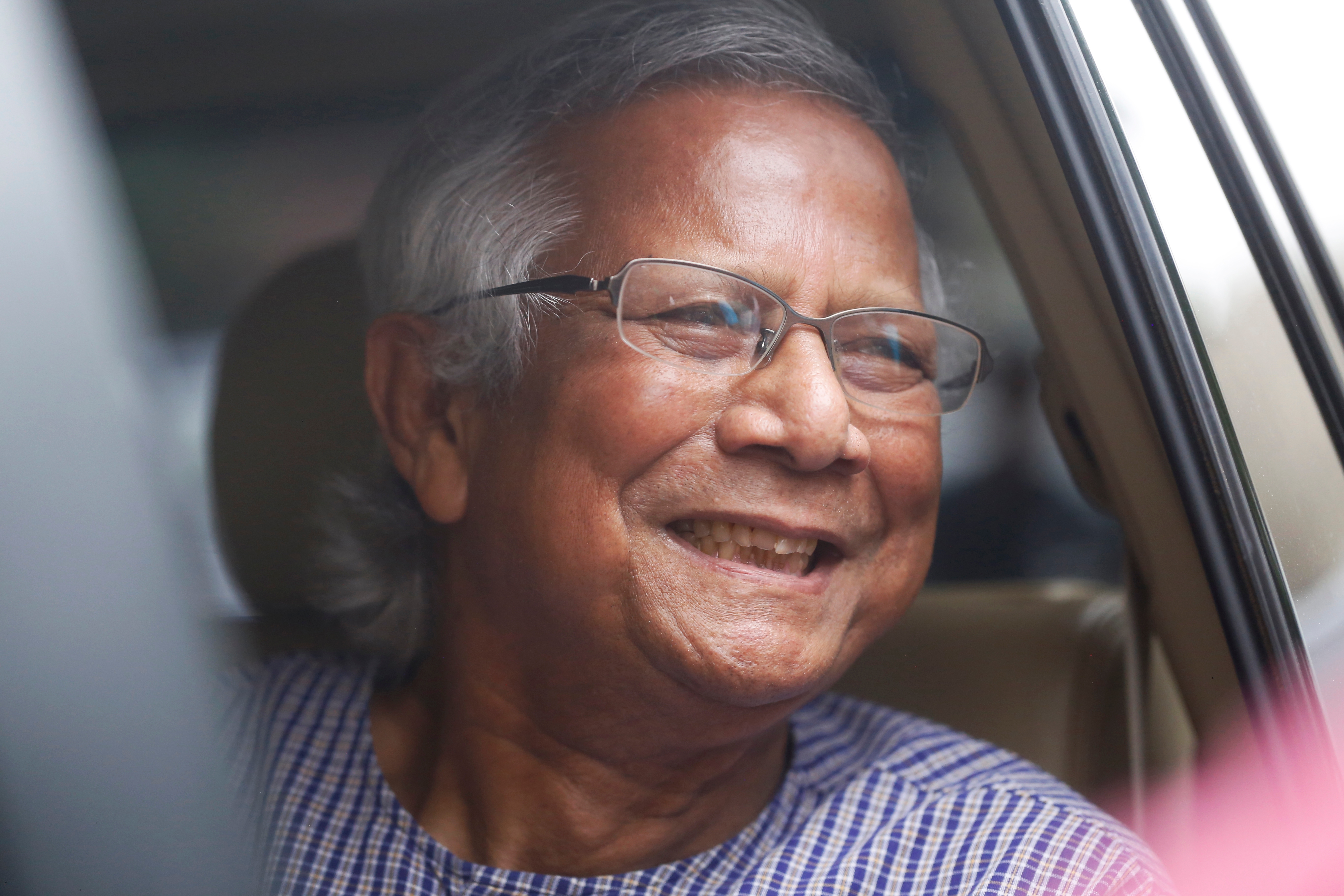
So, what happens now? The country is currently being governed by an interim government led by the 84-year-old Professor Muhammad Yunus – a hugely popular and unifying Nobel Laureate. In the short term, the priority of the interim government must be to restore law and order and a sense of calm.
It must also reassure external stakeholders that the country remains open for business to ensure that remittance flows from overseas workers are not adversely affected and that readymade garments buyers do not divert orders to other countries.
The fall of the previous government has also disturbed the geopolitical equilibrium that existed in the region. The interim government must therefore ensure that in the coming months and years, it treads a delicate line to avoid contributing to any further regional instability.
Beyond these immediate priorities, the interim government must implement a difficult reform agenda. The student protestors have already highlighted the need for an independent election commission, an independent anti-corruption commission, and an independent judiciary.
There is also a need to reform the draconian laws that either allow or do not sufficiently deter the arbitrary arrest, disappearance, and death of its citizens. The rights of Bangladeshis will always be vulnerable if any government – no matter how well-intentioned – has access to such power.
The challenges faced by the interim government cannot be overstated. It has been given an open-ended mandate to reform the country’s institutions and to seek justice for those killed during the protests. The exact nature of the reforms is unclear, and no end date has been set for its tenure. It is difficult for the interim government to achieve its mission when the parameters of the mission are still being defined.
Thus, as soon as it is practical, the interim government should communicate its agenda to the Bangladeshi people. Given that reforms of this nature are always likely to be contentious, having clear communications and clarity around what the interim government hopes to achieve will minimise any future resentment.
Which reforms the interim government pursues, how successful it is in seeking justice, and its ability to build consensus among the relevant stakeholders – student representatives, major political parties, and the army –will determine whether the country will be on the path to a return to electoral democracy or further political unrest.
There is no denying Bangladesh’s impressive economic growth over the past 15 years. The fact that this growth has not been broadly shared is also undeniable. A factor driving this growth has been the political stability that the country has experienced. However, this stability was always fragile, as it was the result of the authoritarian suppression of speech and the democratic rights of the people.
What Bangladesh needs now is a more durable stability. One where the fundamental rights of its citizens, their ability to speak, and their ability to vote in free and fair elections are sacrosanct. Only then will Bangladesh do justice to the tragic sacrifices made by its brave students.
Reshad Ahsan is an Associate Professor of Economics, Faculty of Economics and Business, University of Melbourne.
Image: DHAKA, BANGLADESH- OCTOBER 5, 2023: Nobel Laureate Professor Muhammad Yunus is seen at the Anti-Corruption Commission (ACC) office in Dhaka, Bangladesh on October 5, 2023. Rehman Asad. Shutterstock.
How can we help? Get in touch to discuss how we can help you engage with Asia