Devil in the details of green energy finance
The announcement of a regional investment financing facility to support the green energy transition is welcome, but there are many questions to answer over how it will work, writes Jessica Mackenzie.
7 May 2024
The Emerging Leaders’ Dialogue (ELD) of the ASEAN-Australia Special Summit brought together 65 representatives from ASEAN and Australia to think through the problems facing the world and region over the next decade and consider potential solutions.
Among the ELD’s industry experts were men and women who had led COVID-19 response, founded AI-informed Global Equity Funds, were CEOs of Ag-Tech companies, established the new ASEAN Centre for Climate Change, were slavery specialists, and former trade commissioners and government leaders from across ASEAN.
But the overarching theme, regardless of country or sector, was how we tackle climate change. Specifically, how we work together to solve it – including achieving net zero. We acknowledged that climate needs (both adaptation and mitigation) are desperately underfunded and we agreed that what is spent is less important than how it is designed, implemented, monitored, and scaled.
Addressing more than 100 Australian and Southeast Asian CEOs, on 5 March, Prime Minister Anthony Albanese announced a $2 billion Southeast Asia Investment Financing Facility (SEAIFF). This facility will be managed by Export Finance Australia (EFA), providing loans, guarantees, equity and insurance to support the ASEAN region’s clean energy transition and infrastructure development. The announcement was accompanied by the launch of 10 new ‘business champions’ to be posted to the region from Australia to help secure the facility’s goals.
The $2 billion contribution to the clean energy transition is very welcome. Indeed, any climate finance commitment is welcome, as Australia seeks to demonstrate international climate leadership. Governments working with the private sector and helping shape greener more inclusive markets is welcome too. But as with all announcements, the ‘how’ is the most interesting part for those watching for the likely results.
The EFA is a national body that is more traditionally known for being part of the problem when it comes to climate change. It is not known for its climate expertise, certainly by our international colleagues. In contrast, Australia’s national green bank, the Clean Energy Finance Corporation (CEFC), has a strong reputation for climate investment expertise and a 10-year-plus track record.
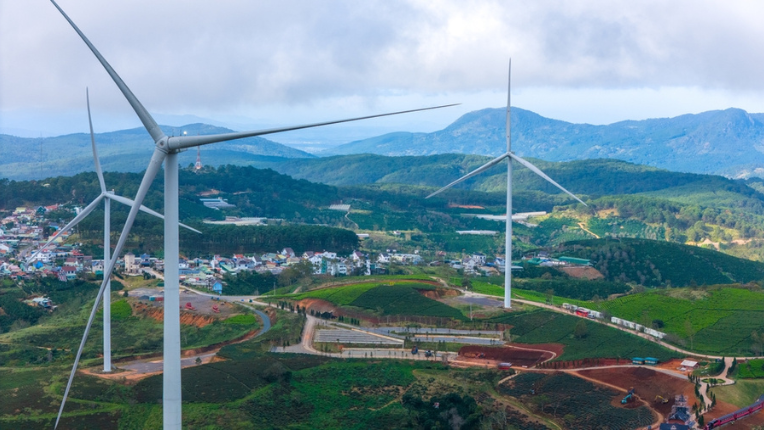
That said, EFA has in the last two years demonstrated some good projects in climate, particularly in Vietnam with VinFast’s e-car manufacturing and the Lotus Windpower project. These are arguably large commercial deals, for technologies that are already well-established, with investors lining up, including in emerging markets.
There’s some debate about whether this is where government should focus – a question of whether it is catalytic or crowding out already willing investors. So, although EFA have demonstrated some gains, it does seem a big leap to jump to a $2 billion fund.
Reflecting on the EFA facility, one observer repeated the old saw, “the devil is in the detail”. Here’s a map of the priority details or what we need to watch for to make this work well:
- What outcomes is it pursuing? ASEAN colleagues at the ELD asked if it was meant to be geostrategic or market shaping – as the two imply completely different approaches. If the facility is genuinely about clean energy transition, how does this link to Australian Climate Ambassador Kristin Tilley’s plans for international climate leadership?
- There’s not a lot of clarity yet about the form most of the finance will take. The Prime Minister said the Fund would be “debt, equity, and guarantees”, but EFA is primarily a provider of debt, which is typically not in demand for the large-scale infrastructure deals that it is intended to finance (plenty of banks offer that). EFA has a mandate that includes equity, but not a lot of the in-house resourcing to deliver it, particularly when structured as a first loss or subordinated tranche. The internal risk tolerance would need to shift.
- Interest from the private sector seems to be focused on what portion would be concessional, and what portion would be predicated on obtaining market returns. If the emphasis is on concessional finance, how slow will the approvals through federal cabinet be and can it stay relevant? And if the emphasis is on market returns, how will it be catalytic for Australian investors?
- Australian climate specialists wonder why the Government isn’t using a mechanism like the CEFC? Despite it being domestically focused, it has demonstrated ample gravitas, which is easily transferable to the international sphere. Would the facility be drawing on the work of organisations, like the Australian Sustainable Finance Institute, that work closely with Australian financial institutions to encourage their investment in climate activities in the region?
- Two billion dollars is significant. We expect this sum to reflect a solid analysis of the regional pipeline. Hopefully – with ten business champions assigned to the region – we will see the first deal within 6-12 months. It is essential the government pairs this with a pipeline that supports earlier stage companies and projects to scale.
- International development specialists asked whether the facility would subsidise the private sector. $2 billion may sound like a lot of funding, but given the size of investments that China and the USA are making, Australian funds must be genuinely catalytic to make a difference. How will we ensure that? Will the safeguards applying to our aid program apply here?
- How does this fit with the Development Finance Review that the Government launched in August 2023, which stated that Australia will not be launching a DFI. What is this then, and how involved will Minister Conroy be, given he initiated that review in 2022?
- The facility reports to the Trade Minister, Don Farrell. What coordination will there be with other ministers, including Minister for Foreign Affairs Penny Wong and Minister for Climate Change and Energy Chris Bowen? In the ELD, there was lengthy discussion about the importance of a whole of nation approach to Australia’s international policy. How will they manage the whole of government aspects of this facility? Who runs the show? Do they have the climate expertise?
The Southeast Asia Investment Financing Facility was a big announcement and a welcome one. But there are a lot of details that need to be clarified before we can be sure the facility is fit-for-purpose. When every government dollar is hard fought in a regional cost of living crisis (and Australia’s own international development program is desperately underfunded at 0.19% of GNI), we need to fight to ensure funds allocated for climate finance are spent well, for our region and our future.
Jessica Mackenzie is Chief of Policy and Advocacy, Australian Council for International Development (ACFID).
This article is part of a series of op-eds published in conjunction with the Emerging Leaders' Dialogue of the ASEAN-Australia Special Summit convened in Melbourne between 4 and 6 March in a partnership between the Australian Government and Asialink.
How can we help? Get in touch to discuss how we can help you engage with Asia